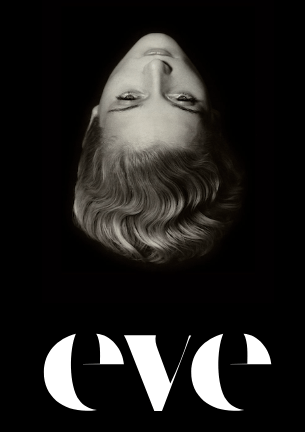

rival consoles
Rival Consoles (aka Ryan Lee West) produces the kind of moody electronic music that’s impossible to ignore + hard to forget. It’s so strikingly cinematic that eve created our original insta reel with his track Odyssey. The British musician is currently touring his new album - Landscape from Memory - so we reached out to Ryan to talk music, film + photography.
Your latest album was described as ‘like a saturated photograph or an abstract painting daubed with bright splotches.’ Are you thinking in visual terms when you create?

I’m often designing sounds to be like brush marks – something bright, textured, aggressive, delicate, blurred. I think electronic music allows you to build sounds in a way that’s similar to building an image.
"I think electronic music allows you to build sounds in a way that’s similar to building an image."
Tell us about creating the track Odyssey. How did you know when it was complete?
Odyssey constantly shifts between minor + major. It's quite hypnotic because it has this strong duality that runs throughout the whole song. I was inspired by wanting to create a very minimal palette of sounds with a clicky, fragmented aesthetic. For example, the intro is just a single note 'A' but articulated in lots of micro rhythms that give meaning alongside textured rhythms.
I was lucky that there was a moment of inspiration that led to a build-up section that not only seemed perfect after the opening idea, but also worked amazingly on top of the initial idea. I learned to layer simple + effective parts in this work + be resourceful with the material that already existed.
Unlike photographers, you perform your creations live. Do you see performance as a new, collaborative stage of creation – or something else?
I see performance as an inspirational place - a way of better understanding ideas. If you perform or even just play a piece of music in 100 different contexts it reveals something different each time. It's good to have fresh understanding of ideas [through performance], because it's very easy to overlook something magical.
What does performing add to the creative process that the studio environment doesn't?
Choices that feel more natural + aware. In a studio it's very easy to be confused or distracted by technique, process + ideas that might not be relevant. Performing is a very restricted moment - I only have two hands – so I decide to do something + that’s all that happens in that moment. It's much more focused.
I kind of believe music has no value at home or in a studio. It only makes sense in a context of other people. You’re vulnerable when you share your ideas to a room full of strangers. You take a risk + become aware of things in the music you didn't see before. Things that felt insignificant become significant + things you believed to be very interesting can seem flat + motionless.
Your recent Dark Mofo performance of Landscape from Memory with Sky Ainsbury's visuals was described as a ‘euphoric + cinematic audiovisual experience’. How do you approach that collaboration?
I like the music + visuals to explore different sensations, from soft + ambient like James Turrell to chaotic abstract works like David Lynch. I want the show to be exciting + intense in moments, gentle + moving in others.
We spend a lot of time thinking about the kind of material we can use in different moments + why, but in the show everything is improvised visually around a framework of ideas. It's always breathing with the show – it's not a perfect playback approach.
It was an honour to be invited to play a festival like Dark Mofo on the other side of the world [Tasmania], especially as the festival allows artists to show what they really believe in + encourage different perspectives.
I’m very lucky to have a fan base that’s allowed me to play venues like that + like the Barbican, which was probably one of the more meaningful experiences of my life. Coming to London as nothing + then playing to a sold-out room there - it really means something.
"...in the show everything is improvised visually around a framework of ideas. It's always breathing with the show – it's not a perfect playback approach."
How do you think about the relationship between what the audience sees + hears?
I like art to be playful + full of contrast, so there is always a sense of that. I want the audience to be pulled into the works + forget about things + be moved emotionally. I don't try to force this, but I hope the way the works shift + move creates an emotional experience. Music dictates the visual narrative to some extent, but I am a very visual thinking maker so heavy imagery is already in my music.
You've cited as influences Ligeti's music in 2001: A Space Odyssey, the opening of Alien, Vertigo's credits, the film Under the Skin. What are you currently drawn to?
I just visited China + happened to see Fragrant River by Yang Fudong – an incredible selection of black + white filmed moments in rural China. About 15 screens that you could walk around. Every single shot was a masterpiece.
Your album Persona was directly inspired by Bergman's classic 1966 film. It’s a film with a particular style + emotional resonance. What is it about Persona?
At the time I was suffering with various mental health issues. When you see a film like that you feel the heaviness of it – both scary but also illuminating. I like how the film is playful with what it is to be human + asks questions, but doesn't force you to have an exact answer for anything.

Still from Persona (1966)
I was very depressed + troubled from my mid-20s into my mid-30s + that has without doubt shaped a lot of my ideas and things I wanted my music to achieve. I always wanted music to have an emotional melancholy - but with hope + a sense of resolution. In comparison to music which is only dark + heavy, I’ve always wanted both light + dark, soft + heavy. I think that resonated with people because it somehow feels more emotional.
What resonates with you photographically?
I love photography + film because of how much magic + otherworldliness can happen when you capture a moment – how the medium, light + framing can align in such powerful ways.
I'm drawn to Vivian Maier + Yang Fudong. I’m a fan of the immortal deep analogue black + white moments that feel both grounded in the everyday but otherworldly + dreamlike at the same time.

Ms. Huang at M. Last Night (2006) by Yang Fudong
"I’m a fan of the immortal deep analogue black + white moments that feel both grounded in the everyday but otherworldly + dreamlike at the same time."
An image on eve that resonates is Window Washers, Seattle, Washington, 2012 by Amy Sacka – I love how dynamic + almost alien this image is. It's such a rare perspective + the rope disrupts the image in such an interesting way.
It feels like you see an image + then your eyes are diverted somewhere very different, like two worlds simultaneously + both have very different sense of scale.

Window Washers, Seattle, Washington (2012) by Amy Sacka (The MF Gallery)


